
It is one of the questions we get most often, and it usually arrives with a little anxiety attached. Should my child know numbers yet? Should they be able to write their name? The short answer is no, and the longer answer is far more reassuring than most parents expect.
It does not start with letters
When South African teachers are asked what they most like to see in a new child, they rarely name academics first. They name self-regulation and social skills. Can the child wait? Can they listen? Can they follow a three-part instruction? Can they dress themselves and go to the bathroom without help?
It sounds simple, but these are exactly the things that allow a child to learn in a group. A child who can wait their turn can sit in a circle. A child who can put on their shoes can go outside without waiting for someone to help.
What we do practise
We work with the Department of Basic Education's National Curriculum Framework, which organises learning around six Early Learning and Development Areas. Well-being is the core the other five rest on, because a child who feels safe and cared for is a child who can learn.
In practice it looks like this:
- Communication: sound games, clapping syllables, hearing rhyme, and recognising the first sound of a word. This is the foundation for reading, not reading itself.
- Exploring Mathematics: counting with real things in hand, sorting by size and colour, estimating and comparing.
- Identity and Belonging: taking turns, sorting out conflict themselves, and knowing where you fit in the group.
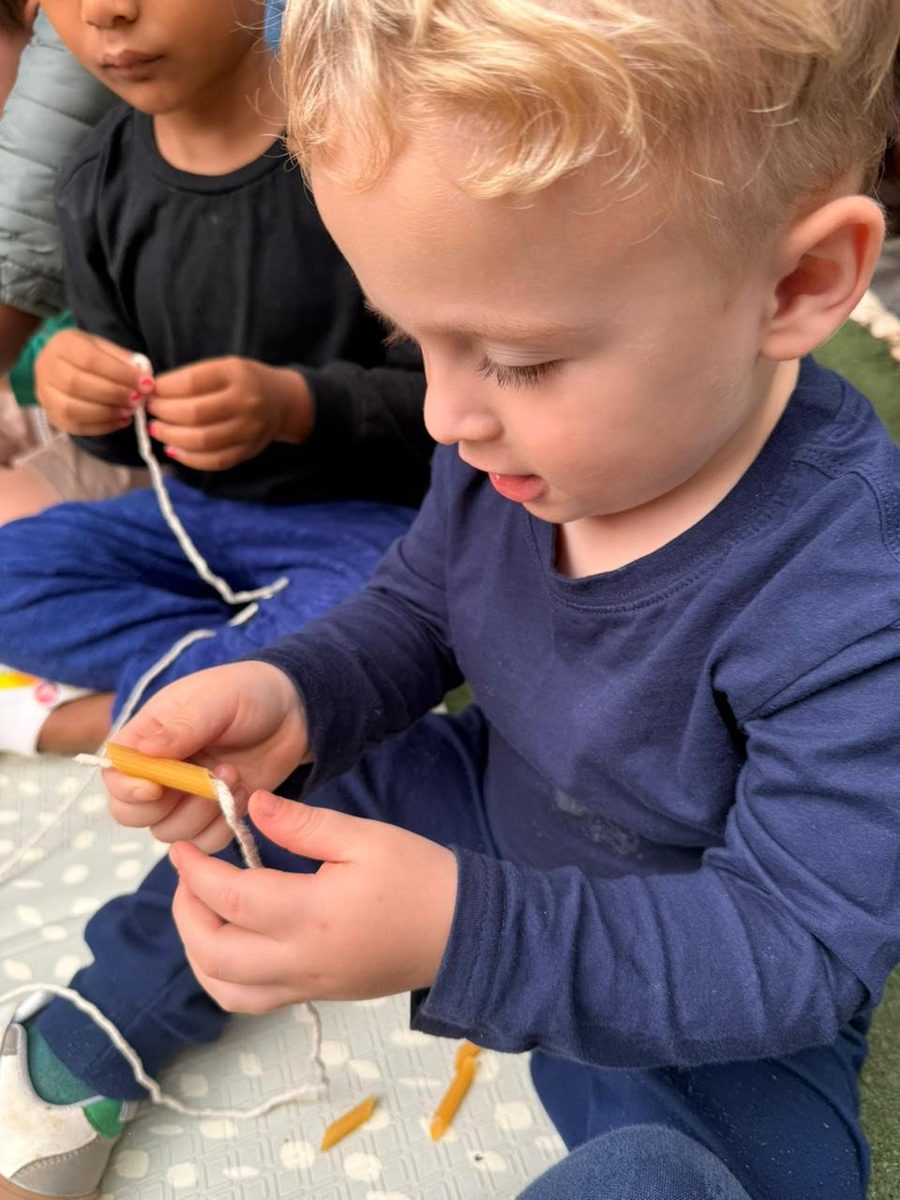
- Well-being: a proper pencil grip, scissors along a line, and clay that strengthens fingers. Fine-motor control belongs to Well-being, because it is the body that is learning.
The formal work begins in Grade 1
The teaching of reading and writing officially begins in Grade 1. Our job is to get everything ready for it: the hand that can hold a pencil, the ear that can tell sounds apart, and the child who can stay with one thing long enough to finish it.
There are no tests, marks or percentages here. We observe, record, and talk to you about it. The framework itself stresses that children are unique and develop at their own pace, with spurts and quiet spells.
What you can do at home
Talk with your child, and really listen to the answer. Read together, every day if you can. Let them dress themselves, pour for themselves and wash their own hands, even if it takes three times as long. Give them jobs that matter at home, like setting the table or changing the dog's water.
And do not worry if they do not fit a checklist. Come and talk to us about where your child is right now. That is exactly the conversation we are here for.
See also: Our ProgrammeFacilitiesFees & Enrolment